Whole-House Repiping for Aging Supply Lines
Whole-house repiping means removing the old water supply lines and installing new ones from the main shut-off to every faucet, toilet and appliance. The new lines are usually PEX or copper, and the drain and vent pipes stay as they are.
Describe the job and add your city. Free to request, no obligation.
Owners usually call once the pipes start to show their age: pinhole leaks in copper, rust-coloured water from galvanized steel, weak pressure at the showers, or a polybutylene system that insurers no longer like. One leak can be patched. When leaks keep appearing in different spots, the pipe is wearing out everywhere and repairs only chase it.
A repipe sounds like demolition, but a planned job opens small access holes, works through attics, basements and crawlspaces where it can, and patches what it cuts. Most houses are done in a few days, and the home can often stay occupied if the water is only off for part of each day.
What the work includes
- A survey of the existing pipe material, shut-offs and fixture count
- New PEX or copper supply lines to every fixture and appliance
- New shut-off valves at fixtures where the old ones are failing
- Connection to the main shut-off and the water heater
- Pressure test of the new system before any wall is closed
- Removal of old piping that is easy to reach and disposal of waste
- Patching of the access openings in drywall or plaster
- Permit and inspection where the local code requires them
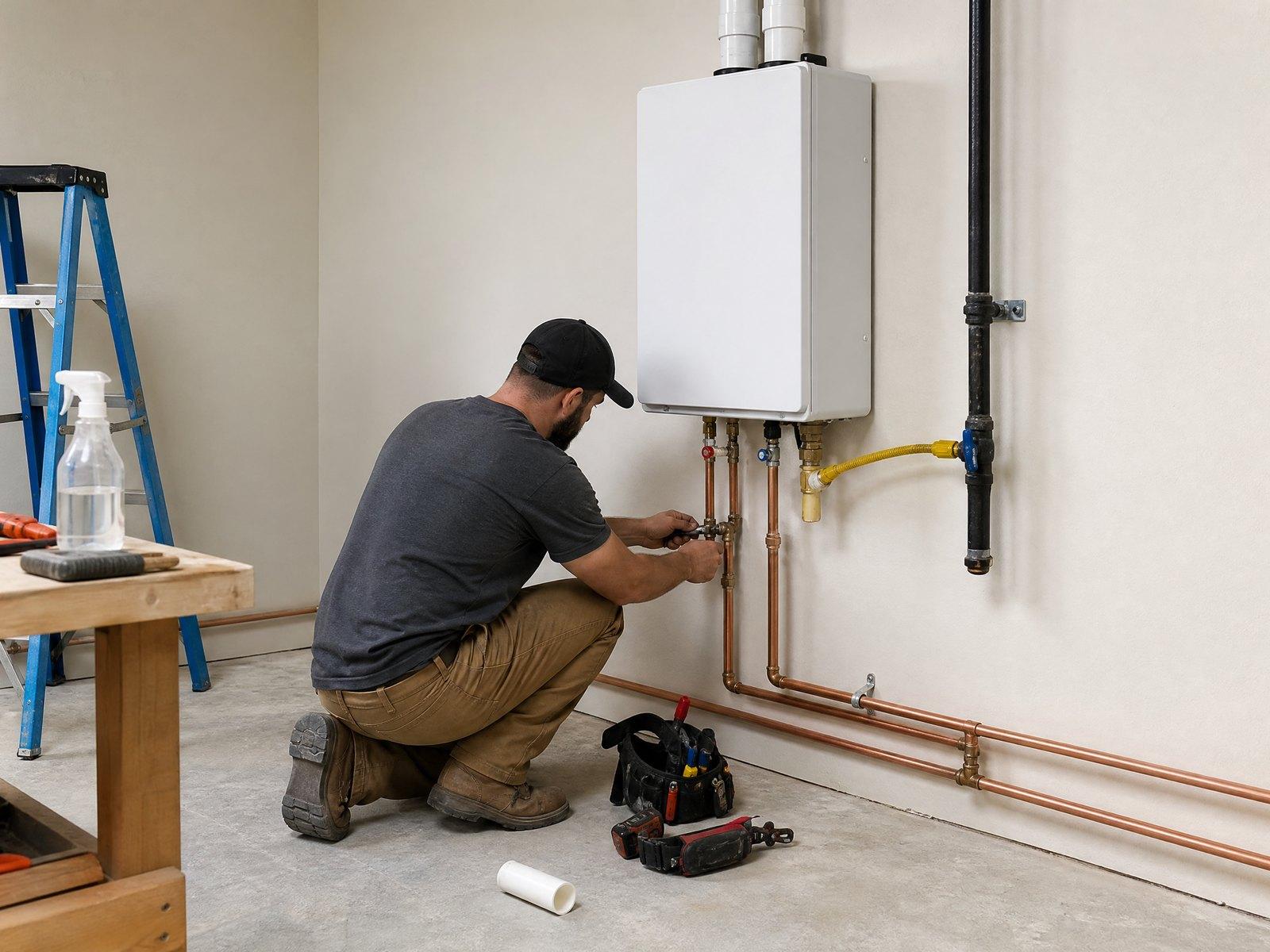
Signs the pipes inside the walls are done
Brown or orange water when a tap has not run for a few hours
Several fixtures with weak flow while the street pressure is normal
Pinhole leaks or green crusty stains on copper in more than one place
Galvanized steel or grey polybutylene lines visible in the basement
Water stains on ceilings or walls with no roof or fixture leak to explain them
A history of patch repairs that keep failing within a few years
How the work goes, step by step
Survey the system
The plumber reviews the existing pipe, the water pressure, the number of fixtures and where walls can be opened.
Plan the routes
Supply routes are chosen room by room to keep openings small and to avoid structure and wiring.
Rough-in the new lines
New pipes are run from the main to each fixture while the old lines still feed the house wherever possible.
Test before closing walls
The new system is pressure tested and checked for leaks while everything is still visible.
Connect, remove and patch
Fixtures are switched to the new lines, old pipe is removed and the openings are patched for painting.
What changes the price
- Size of the house
- More bathrooms, floors and fixtures mean more pipe, more openings and more labour.
- PEX or copper
- PEX is faster and more flexible to run, while copper takes longer to install and the material costs more.
- Wall and ceiling access
- Open basements and attics keep the job quick, while finished walls and plaster raise both the cutting and the patching.
- Finish repair
- Drywall patching is often included, but paint, tile and plaster repair may be a separate line, so ask.
- Fixtures and valves
- Replacing old shut-off valves and supply stops adds a small amount per fixture but prevents the next leak.
- Occupied or empty home
- Working around a family that needs water in the evening takes more planning than an empty renovation.
What a good quote spells out
- The pipe material proposed and why it suits your house
- How many fixtures and outlets are covered, and whether outdoor hose bibs are included
- How long the water is expected to be off each day
- What patching is included and what is left for a painter
- Whether a permit and inspection are part of the price
Whole-Home Repiping: questions people ask
Is repiping worth it?
If the pipes leak repeatedly or the water is discoloured, a repipe usually costs less than years of patching and the damage that leaks cause. If you have had a single leak and the rest of the pipe looks good, a repair may be enough.
PEX or copper for a repipe?
Both are accepted by most codes. PEX is flexible and quicker to install, copper is rigid and long-lived but costs more. The better choice depends on your water chemistry, your budget and the plumber's experience with each.
Can a family stay in the house during a repipe?
Usually yes. The water is shut off for portions of the day, and the crew usually leaves a temporary water supply for the evening. Tell the plumber if anyone needs water at certain times.
Will a repipe damage the walls?
It needs openings, but a good plan keeps them small and puts them in places that are easy to patch, such as closets, behind fixtures and in basement ceilings.
Other Cundia services
Planning a Big Plumbing Job? Get a Written Quote.
Tell us what is going on, where the property is, and anything you already know: the age of the pipes, past repairs, inspection videos. We review every request and reply with next steps.
Request a free quote →