Sewer Line Repair and Replacement: What the Camera Shows
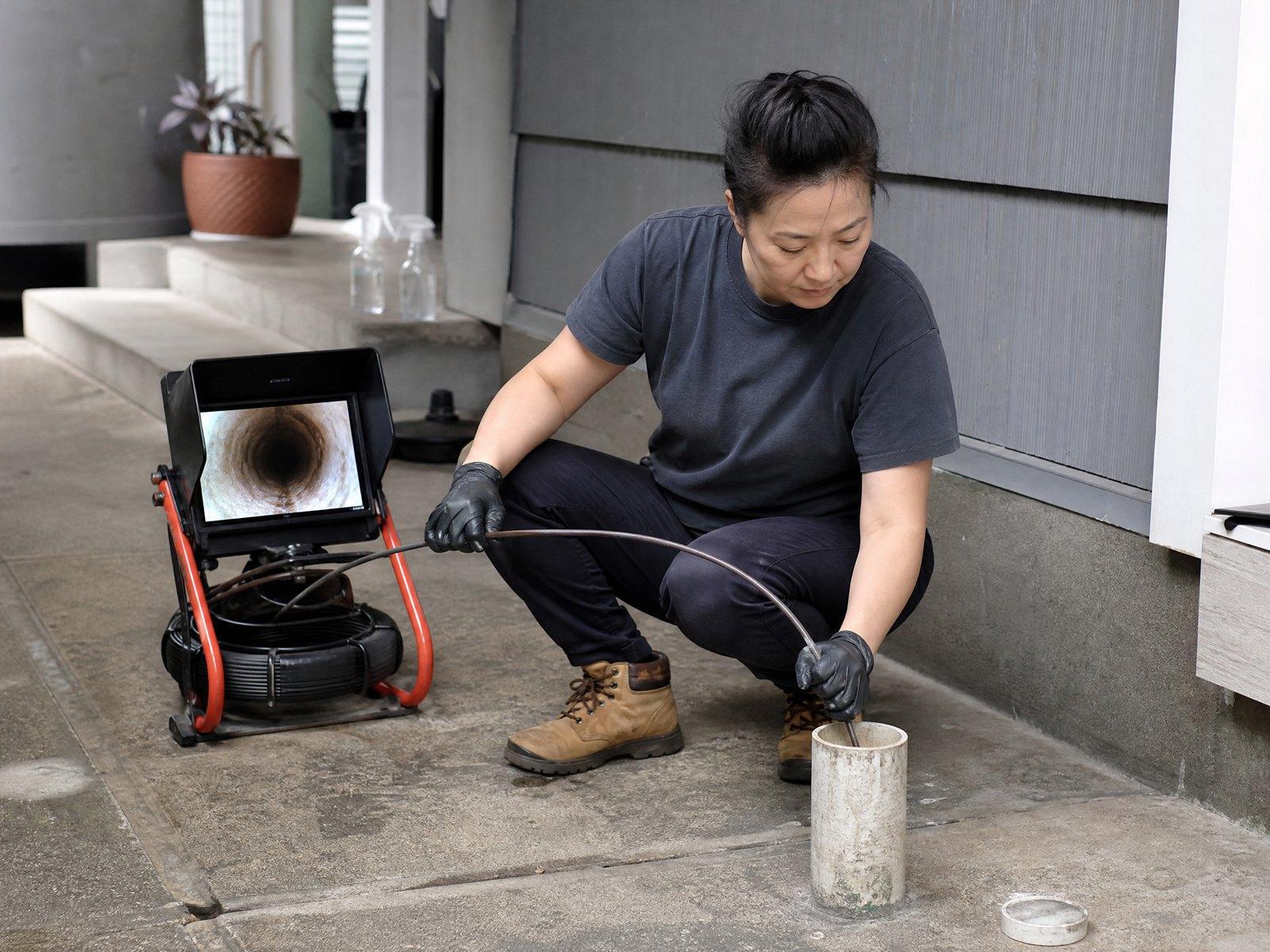
Sewer line repair fixes a short damaged section of the pipe between your building and the city main, while replacement swaps the whole run. A camera inspection decides which one you need, because it shows the exact spot and type of damage: a cracked joint, roots, a sagging belly or a collapsed section.
Describe the job and add your city. Free to request, no obligation.
Most trouble comes from age and ground movement. Clay and cast iron pipes from the middle of the last century crack at the joints, tree roots work their way in, and shifting soil bends a once-straight line until it holds water. Newer plastic pipe can also be crushed by heavy loads or settle out of line.
Digging is no longer the only answer. Pipe bursting and cured-in-place lining can replace or reline a line with small access pits, but they do not suit every pipe. The sections below explain how to read the signs, what the options involve and what to compare when quotes arrive.
What the work includes
- Camera inspection with a recording and a note of where each defect sits
- Locating the line and its depth from the building to the city connection
- Spot repair of a single broken joint or short section
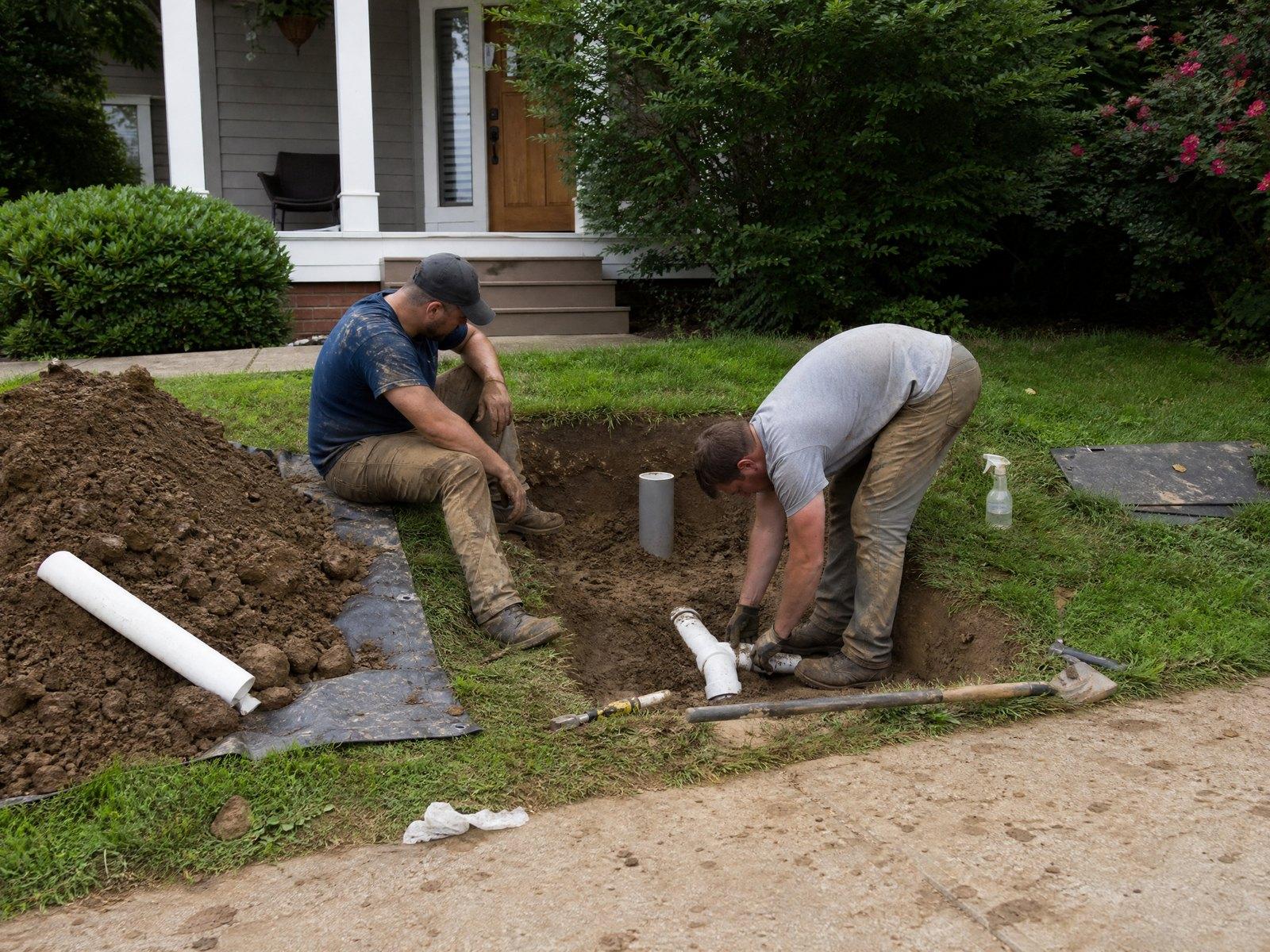
- Full replacement by open trench, pipe bursting or lining
- Cleanout installation so the line can be reached later
- Permit application and the inspection the city requires
- Backfill, compaction and restoration of the lawn, driveway or sidewalk
- A final camera pass or flow test to show the new line works
Warning signs from the drains and the yard
Slow drains or gurgling on the lowest floor that return soon after snaking
Sewage smell near the foundation or a patch of unusually green or soggy lawn
Backups in a basement floor drain when several fixtures run together
A sunken strip of ground or driveway that follows the line of the pipe
Rodents, insects or sewer odour that appears with no other source
A plumber's cable that stops at the same spot every time
How the work goes, step by step
Describe the symptoms
Tell us when backups happen, which drains are affected and whether a plumber has already snaked the line. Reports or old camera videos help.
Camera inspection
A camera runs through the line from a cleanout or a toilet flange. The recording shows the defects and where they are.
Locate and measure
The line is traced above ground to get its length, depth and path past trees, driveways and other utilities.
Compare the options
You get a spot repair, a trenchless option and an open-cut option side by side whenever they are all realistic for your line.
Permit, work and inspection
The permit is pulled, the line is repaired or replaced, then it is tested and inspected before the trench is filled.
What changes the price
- Length and depth
- Every extra foot of pipe and every extra foot of depth adds excavation, shoring and material, so a deep line under a long front yard costs far more than a short shallow one.
- Method
- Trenchless methods cost more per foot in many markets but save the landscaping, while open-cut is cheaper per foot and costs more to restore.
- What sits on top
- A lawn is easy to patch, but concrete, interlock, mature trees and retaining walls raise the restoration bill.
- Pipe material and condition
- The old pipe determines whether bursting or lining can work and what the new pipe has to connect to.
- Connection to the city main
- Work in the street needs a permit and sometimes a municipal crew, which adds time and fees.
- Obstacles
- Gas, water and electrical lines that cross the route have to be located and protected.
What a good quote spells out
- The camera findings, with the location and type of each defect written out
- Which method is proposed, and why the other methods were ruled in or out
- The exact start and end points of the work, including the city connection
- What restoration is included: lawn, asphalt, concrete, interlock or landscaping
- Who pulls the permit and which inspections the city requires
Sewer Line Repair & Replacement: questions people ask
How long does a sewer line last?
It depends on the material. Clay and cast iron lines laid decades ago often fail at the joints, while modern plastic pipe can last far longer if it was bedded properly. Age alone does not decide it, which is why a camera inspection is the best check.
Is a sewer line repair or replacement more worthwhile?
A repair makes sense when the camera shows one isolated defect and the rest of the pipe is sound. If several sections are cracked, offset or sagging, replacement avoids paying for repeated digs.
Can the line be replaced without tearing up the yard?
Often, yes. Pipe bursting and lining need only small access pits, but they do not work on a fully collapsed line or a deep belly. A camera pass tells you whether trenchless is possible.
Does home insurance cover a broken sewer line?
Policies differ. Many exclude wear and tree roots, and some sell a separate add-on for service lines. Read your policy and ask your insurer before work begins.
Other Cundia services
Planning a Big Plumbing Job? Get a Written Quote.
Tell us what is going on, where the property is, and anything you already know: the age of the pipes, past repairs, inspection videos. We review every request and reply with next steps.
Request a free quote →