Commercial Plumbing and Backflow Prevention for Property Managers
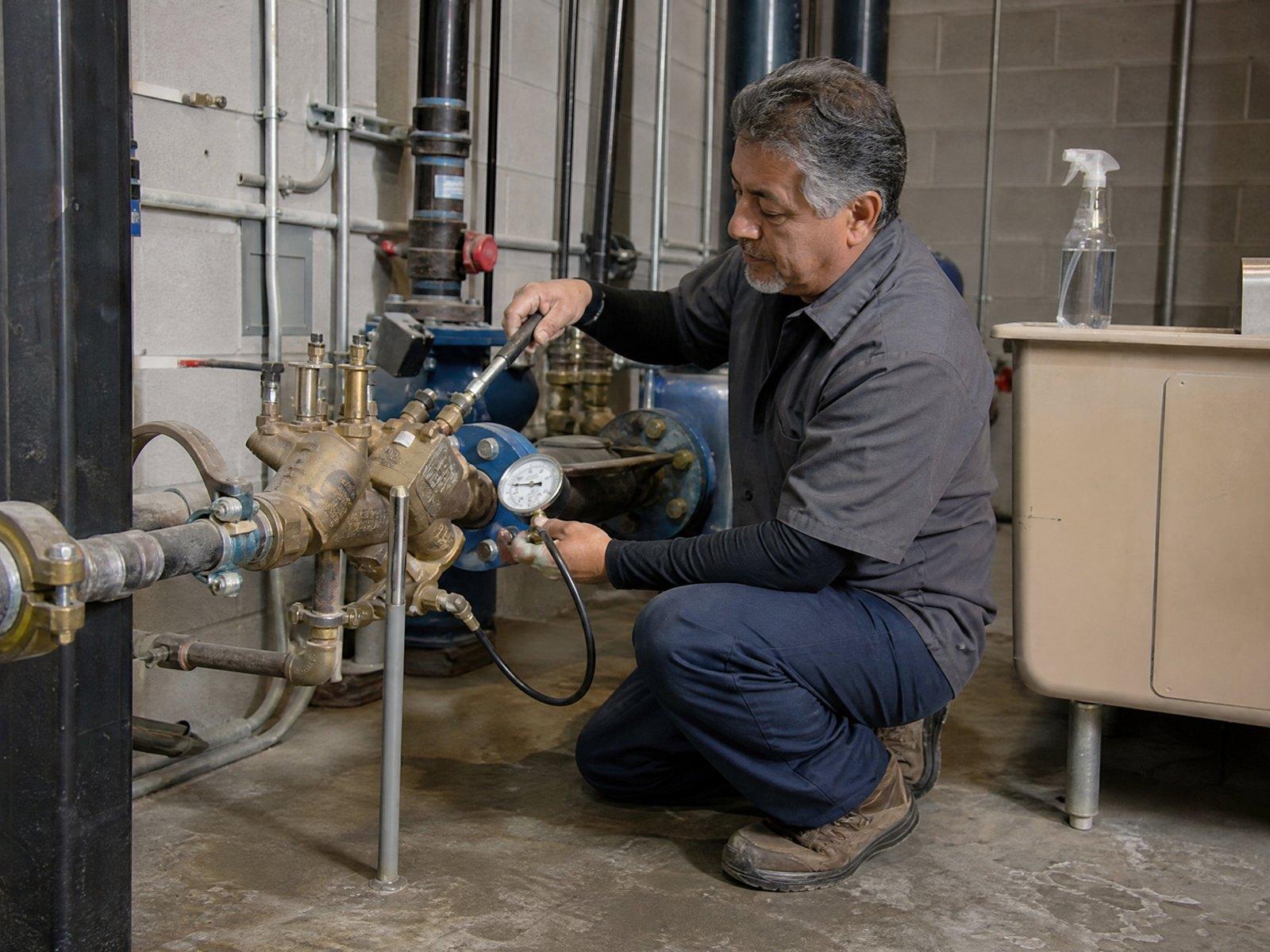
Commercial plumbing work covers rough-ins for tenant fit-outs, restroom and kitchen build-outs, water and drain upgrades, commercial water heaters and backflow prevention devices. Backflow devices protect the public water supply from contamination, and many municipalities require them to be tested every year.
Describe the job and add your city. Free to request, no obligation.
Property and facility managers usually need two things from a plumbing contractor: a scope that fits a budget or a work letter, and a schedule that works around tenants. A clear quote lists each room, riser and device so it can go into a capital plan or a landlord and tenant agreement without rework.
Buildings vary a lot. A strip-mall unit, a medical office and a light industrial shop each have different water demand, drain layout and code rules, so the first step is a walk-through of the space and a look at what the drawings or the existing pipes show.
What the work includes
- Walk-through of the space and review of the plans or existing layout
- Rough-in of water, waste and vent lines for new fixtures
- Fixture installation for restrooms, break rooms and kitchens
- Upgrades to domestic water and drain lines that no longer suit the use
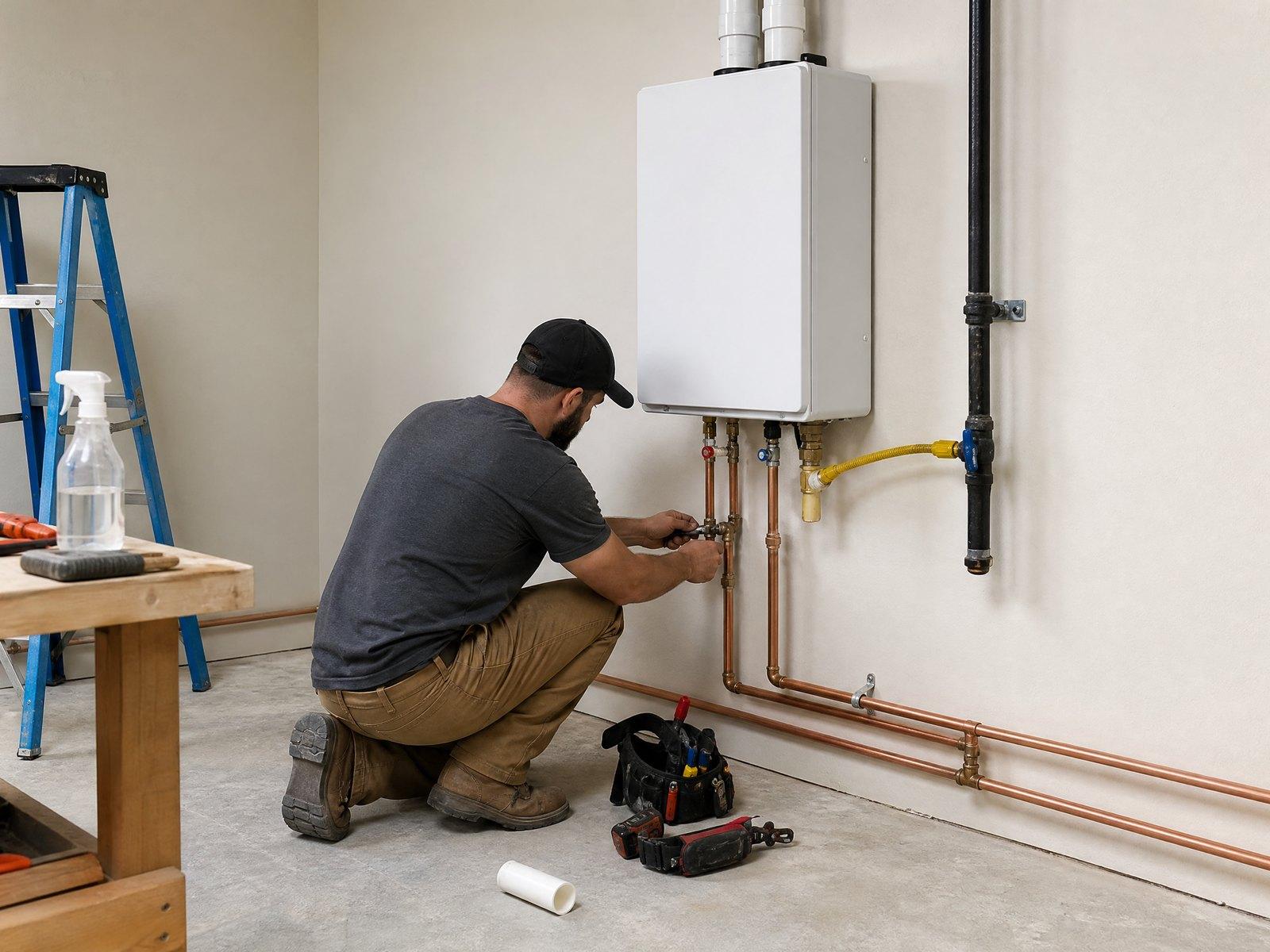
- Commercial water heater replacement or new installation
- Backflow preventer installation, repair and annual test where required
- Permits and coordination with the building inspector
- Records of tests and inspections for the building file
When a commercial building needs plumbing work
A tenant fit-out or change of use that adds fixtures or a kitchen
A notice from the water utility about a backflow test or missing device
Repeated drain backups in a shared building line
Low water pressure on upper floors after a new tenant moves in
A water heater that no longer keeps up with staff or customers
Corroded or leaking risers in an older commercial building
How the work goes, step by step
Share the scope
Describe the space, the fixtures you need, any drawings and the dates the tenant has to open.
Walk the space
The plumber checks the existing lines, shut-offs, floor drains and any devices that require testing.
Written scope
You receive a scope by area or phase, with allowances and the permits and inspections the work needs.
Coordinate the work
The job is scheduled around other trades and tenant hours, with water shut-offs announced ahead.
Test and close out
Pressure tests, inspections and any backflow test reports are completed and delivered for your records.
What changes the price
- Number and type of fixtures
- A single restroom costs far less than a floor of restrooms or a commercial kitchen with floor drains.
- Slab or ceiling work
- Cutting concrete for new drains takes more time than running pipe overhead.
- Size of lines and devices
- Larger water services, risers and backflow assemblies cost more to supply and to install.
- Building access and hours
- After-hours work, elevators and security rules affect how much can be done each shift.
- Permits and inspections
- Commercial permits and the number of inspections vary by municipality.
- Testing and paperwork
- Backflow test reports and as-built drawings add some time but protect the building file.
What a good quote spells out
- A scope split by area or phase that can be dropped into a budget
- Which municipality requirements apply to backflow devices and testing
- Who is responsible for permits and inspections
- How water shut-offs are scheduled and communicated to tenants
- What documentation is delivered when the work is finished
Commercial Plumbing & Backflow Prevention: questions people ask
What is a backflow preventer?
It is a valve assembly that stops water from flowing backward into the public supply. Many commercial properties need one on the water service or on specific equipment such as irrigation, boilers and kitchens.
How often does a backflow device need testing?
Many municipalities require an annual test by a qualified tester, but the rules vary. Check with your water utility for the schedule that applies to your building.
Can one contractor handle several buildings?
Yes. Property managers with more than one site can describe the properties and the jobs in a single request, and the quote can be split by site.
Who pulls the permit for a tenant fit-out?
It depends on the lease and the contractor. Ask the quote to state who applies for the permit, who pays the fee and who books the inspections.
Other Cundia services
Planning a Big Plumbing Job? Get a Written Quote.
Tell us what is going on, where the property is, and anything you already know: the age of the pipes, past repairs, inspection videos. We review every request and reply with next steps.
Request a free quote →